Love the idea of glass-walled living but wonder if it works for real life in New Canaan? You are not alone. Modernist homes in town are icons of design, yet many buyers and sellers want to know how these houses live day to day, what to budget for, and how to navigate preservation and upgrades. This guide gives you a clear, practical view of New Canaan’s Modernist legacy, what to expect in the plans and materials, and how to approach maintenance, buying, and selling with confidence. Let’s dive in.
Why New Canaan leads Modernism
New Canaan is one of the country’s most important addresses for mid‑century Modern homes. After World War II, a group of Harvard‑trained architects known as the Harvard Five designed experimental houses here that drew national attention. Philip Johnson’s Glass House anchors that legacy and now operates as a museum and National Trust site. You can explore the context through the Glass House’s overview and its Modern Homes Survey, which documented the local stock and design patterns. The Glass House Modern Homes Survey reports 91 Modern houses within its study, and researchers estimate that more than 100 were built through the 1970s.
Civic interest in preservation is part of daily life for many owners. Local groups and stewards have rescued notable examples, and the town’s regulatory framework includes historic review in designated areas. The New Canaan Museum & Historical Society’s Modern New Canaan initiative helps contextualize these homes and highlights local conservation efforts.
What you’ll see in a New Canaan Modernist home
Design language and structure
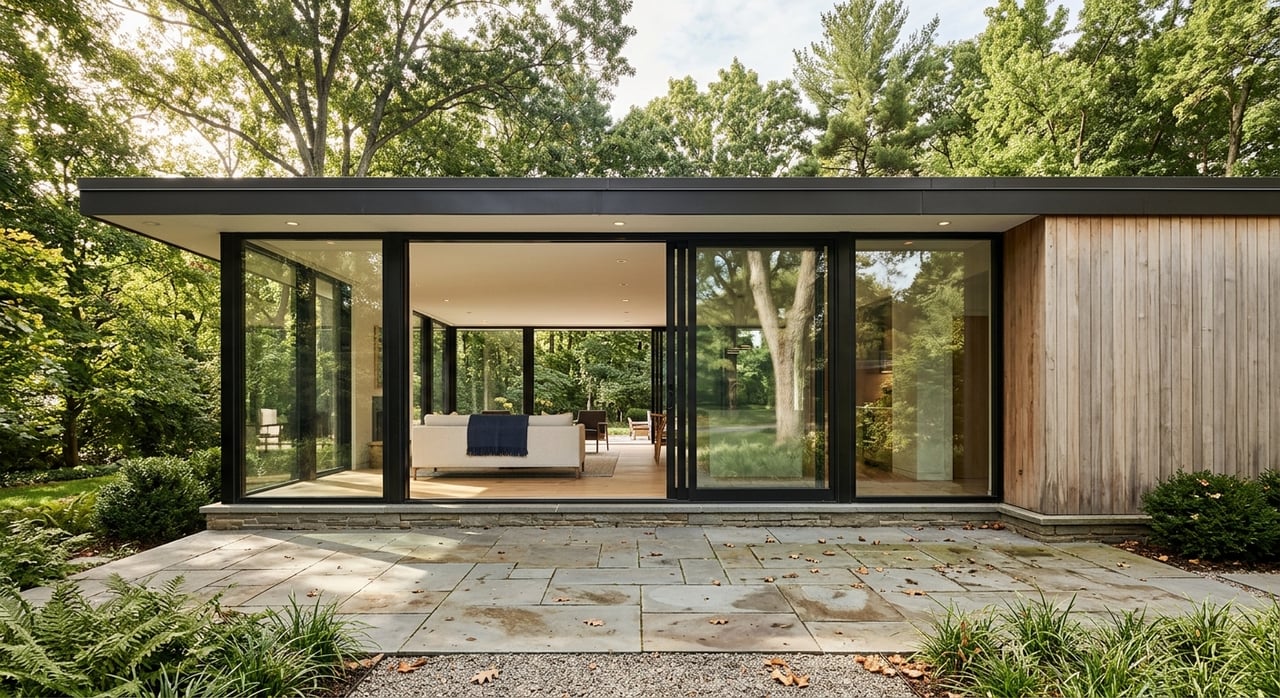
Most New Canaan Modernist houses express an elegant, simple structure. You will often find post‑and‑beam construction that frees the plan from heavy interior walls, allowing long spans and open rooms. Large glass walls, sliding doors, and clerestory windows bring in daylight and extend views to the landscape. Roofs are typically flat or low pitch, and volumes are clean and rectilinear. Materials favor honesty and warmth: local stone or brick, wood ceilings, concrete, and metal appear frequently, along with original built‑ins and integrated furniture. You can see these patterns documented in the Modern Homes Survey.
Floor plans and indoor‑outdoor flow
Plans tend to cluster living, dining, and kitchen zones into open, flexible spaces that connect to terraces or patios. Bedrooms often sit in a private wing or in a separate pavilion off the main volume, depending on the architect and site. Renovated examples in town show how kitchens and circulation can be tuned to make the kitchen the functional heart of the home, improving family flow and entertaining. For a glimpse of how this plays out in real homes, see Architectural Digest’s New Canaan case study.
A frequent surprise for first‑time viewers is orientation. Many houses present a modest face to the street and open dramatically to private gardens, wooded settings, and rear terraces. The most intense glass and views often face into the lot rather than toward the road. The New Canaan Museum & Historical Society’s Modern New Canaan highlights this siting strategy.
How they compare to Colonials
New Canaan has many Colonial and revival homes with pitched roofs, center‑hall plans, and formal facades. Modernist houses are different. They prioritize openness, horizontal lines, and careful siting to blend indoor and outdoor experiences. If you are used to traditional suburban layouts, the shift to open volumes and glass can feel refreshing and light.
Everyday living: strengths and tradeoffs
What works really well
Modernist houses often shine in daily life. Open plans and strong indoor‑outdoor connections make it easy to host, supervise play in the yard, and enjoy long, bright days. Lower, more horizontal volumes create an airy, uplifting feel that design‑minded buyers love. Renovated examples show kitchens and entries reworked to support the real pattern of family life. You can see this approach in Architectural Digest’s overview of midcentury architecture and its New Canaan case study referenced above.
What to plan for
Open space and glass come with two common questions: privacy and noise. Sound travels more freely in open rooms, and glass increases visual exposure. Many owners add subtle solutions like room dividers, translucent panels, or landscape buffers. Bedroom placement and site design also help. Storage and service areas can be lean in original plans, with fewer closets and compact mudrooms or garages. Owners often respond with built‑ins, wrap‑around closets, or a discreet addition that respects the original architecture. These adjustments show up in local renovation case studies featured by Architectural Digest.
Kid‑friendly detailing matters too. Durable finishes near high‑traffic zones and a clear circulation sequence from entry to mudroom to kitchen can make daily life smoother. The good news is that most of these solutions are modest and maintain the spirit of the original design.
Smart upgrades and maintenance
Many mid‑century components perform well with care, but some details need a modern plan and budget. Focus on windows, roofs and drainage, HVAC and insulation, and specialty materials.
Windows and energy performance
Single‑pane glass and older metal frames are common in period houses and lag today’s efficiency standards. You have options that protect the architectural look while improving comfort. The Department of Energy’s guidance highlights interior or exterior low‑E storm windows and other retrofit inserts as cost‑effective ways to improve thermal performance without full replacement. Review the DOE overview on low‑E storm retrofits to understand how these upgrades can cut drafts, improve U‑factor, and preserve proportions. For historically significant glazing, coordinate with preservation guidance before altering frames or sightlines.
Roofs, drainage, and water management
Flat and low‑slope roofs demand excellent detailing and vigilant water control. Ponding, failed skylights, and flashing problems are typical causes of chronic leaks. Modern single‑ply membranes often last roughly 15 to 30 years depending on product and installation, so budget for periodic replacement and careful skylight and flashing work. For lifespan context, see this roof membrane durability summary.
Local conservation projects underscore these priorities. The Glass House campus’s Brick House required a comprehensive restoration, in part because of roof and skylight failures along with drainage and systems updates. You can read the Brick House restoration update for a sense of scope and sequencing.
Comfort, HVAC, and insulation
Many Modernist homes pre‑date today’s insulation and HVAC standards. The most impactful path often starts with air‑sealing and HVAC upgrades, then addresses windows and roofs. Zoned systems and heat‑pump conversions can bring better comfort and efficiency, and accessible roof or floor assemblies may allow added insulation. The Brick House project included mechanical upgrades as part of its broader conservation, illustrating how staged improvements can work in practice. Explore the Glass House press release for details.
Specialty materials and trades
Original wood finishes, terrazzo, metal frames, and custom built‑ins often benefit from craftspeople familiar with mid‑century materials. Replacement parts and custom profiles can add cost and lead time. Landmark examples on the Glass House campus illustrate the skill level required for historically significant fabric. If your home is documented in a survey or noted by a museum, plan work with that status in mind.
Preservation and local rules
New Canaan’s municipal code includes historic district review in designated areas. Community interest in Modernism also means that some properties receive public attention or are subject to conservation agreements. Before you plan additions or substantial exterior changes, check local rules and whether your home appears in the Modern Homes Survey or is recognized by local groups. Start with the New Canaan municipal code portal and the town planning office for current procedures.
Buying or selling a Modernist home in New Canaan
Market snapshot and buyer profile
New Canaan is an affluent Fairfield County market with median single‑family values that trend well above the state average. Architect‑designed properties often trade to buyers who specifically seek intact Modernist features or who plan architect‑sensitive renovations. Because inventory and pricing shift with season and design provenance, it pays to review current data and tour comparables with a local expert.
Buyer due diligence checklist
Engage an inspector and mechanical contractor who understand mid‑century construction. During your contract period, prioritize these items:
- Roof condition, ponding, drainage, flashing, and skylights. See a roofing lifespan summary.
- Full window and curtain‑wall review, including seals, frame corrosion, and operability. DOE guidance on low‑E storm retrofits outlines practical upgrade paths.
- Evidence of past water intrusion in basements, crawlspaces, or finishes. The Brick House restoration update shows how roof and drainage issues can cascade.
- Electrical service capacity and code updates suited to modern loads.
- Insulation levels and HVAC adequacy, including the feasibility of zoned heat‑pump retrofits.
- Documented renovations and permits for past additions.
- Any restrictive covenants, preservation easements, or historic‑district rules. Start with the town code portal.
Additions, setbacks, and lot size
Zoning in New Canaan varies widely by district. The map includes zones with multiple minimum lot sizes, from 7,500 square feet up to two acres. Your ability to add square footage, build a garage, or install a pool depends on your specific district and setbacks. Review your zone and site parameters early. For a high‑level look at local lot‑size categories, see this zoning summary reference and confirm details with the town.
Seller strategies that work
Buyers who value Modernism prize authenticity. Highlight intact original details and any documented conservation work. If you replaced key components like glazing, HVAC, or roofing, provide specifications and performance improvements. Provenance matters, so references to surveys or museum context can help when appropriate and respectful of owner privacy. The Modern Homes Survey is a credible citation for design lineage.
Ready to explore your options?
If you are weighing a purchase or preparing to list a Modernist home, you deserve clear analysis and a thoughtful plan. With a data‑informed, high‑touch approach across lower Fairfield County, we help you price with confidence, market to the right audience, and navigate inspections and upgrades that matter. Connect with Robin Bartholomew to schedule a consultation and move forward with clarity.
FAQs
Are New Canaan Modernist homes family‑friendly for daily life?
- Yes. Open plans and indoor‑outdoor flow support casual living and entertaining, and modest, architect‑sensitive changes to kitchens, storage, and entries can optimize function. See examples in Architectural Digest’s New Canaan case study.
Do Modernist homes cost more to maintain than Colonials?
- Possibly. Flat roofs, custom glazing, and specialty finishes can carry higher upkeep costs. A recent local conservation, the Glass House Brick House, involved significant roof, skylight, drainage, and systems work as detailed in the restoration update.
Can I improve energy efficiency without changing the Modernist look?
- Yes. Targeted steps such as interior or exterior low‑E storm windows, better air‑sealing, attic or roof‑deck insulation, and zoned heat pumps can improve comfort and bills while preserving proportions. Review DOE guidance on low‑E storm retrofits.
Are there rules about altering a Modernist home in New Canaan?
- Some properties fall within historic districts or have conservation agreements. Always confirm with the town and check the municipal code portal. If your home appears in the Modern Homes Survey, factor that context into planning.
What should buyers inspect first when touring a Modernist home?
- Prioritize roof membranes and skylights, window and curtain‑wall performance, any signs of water intrusion, electrical and HVAC capacity, insulation, and permit records for past work. Use the roofing lifespan summary and DOE window retrofit overview as quick references.