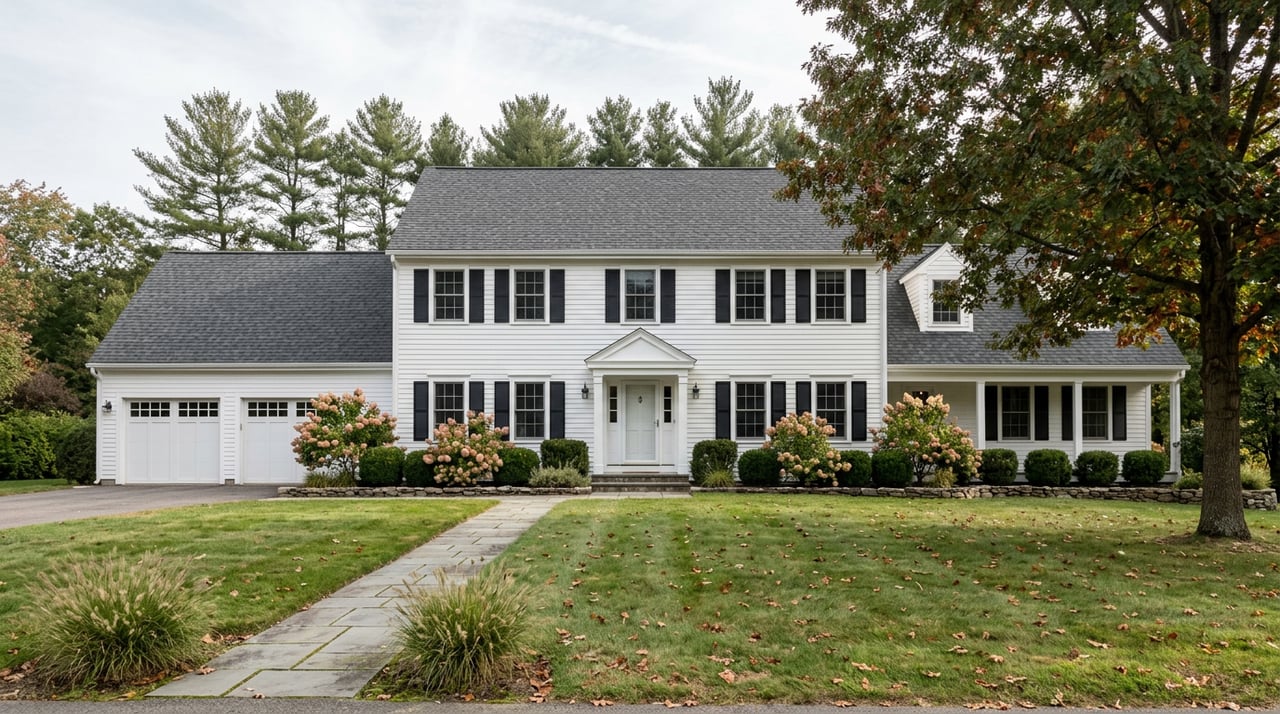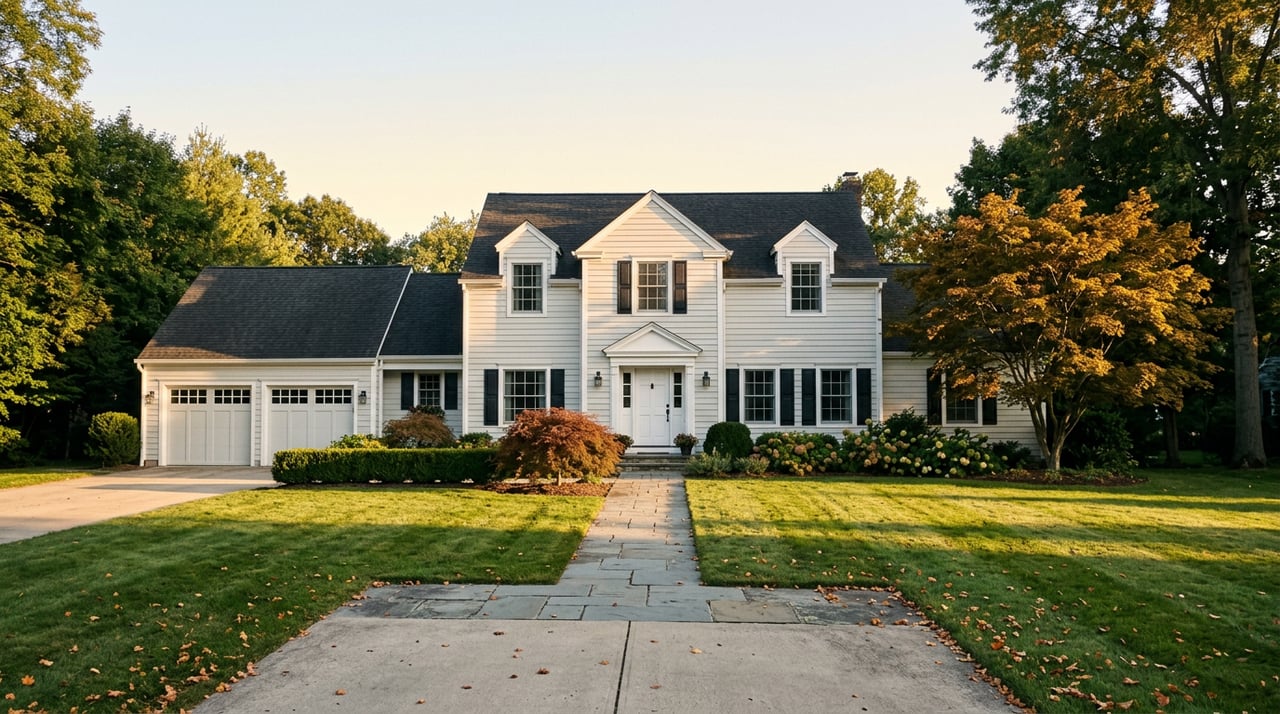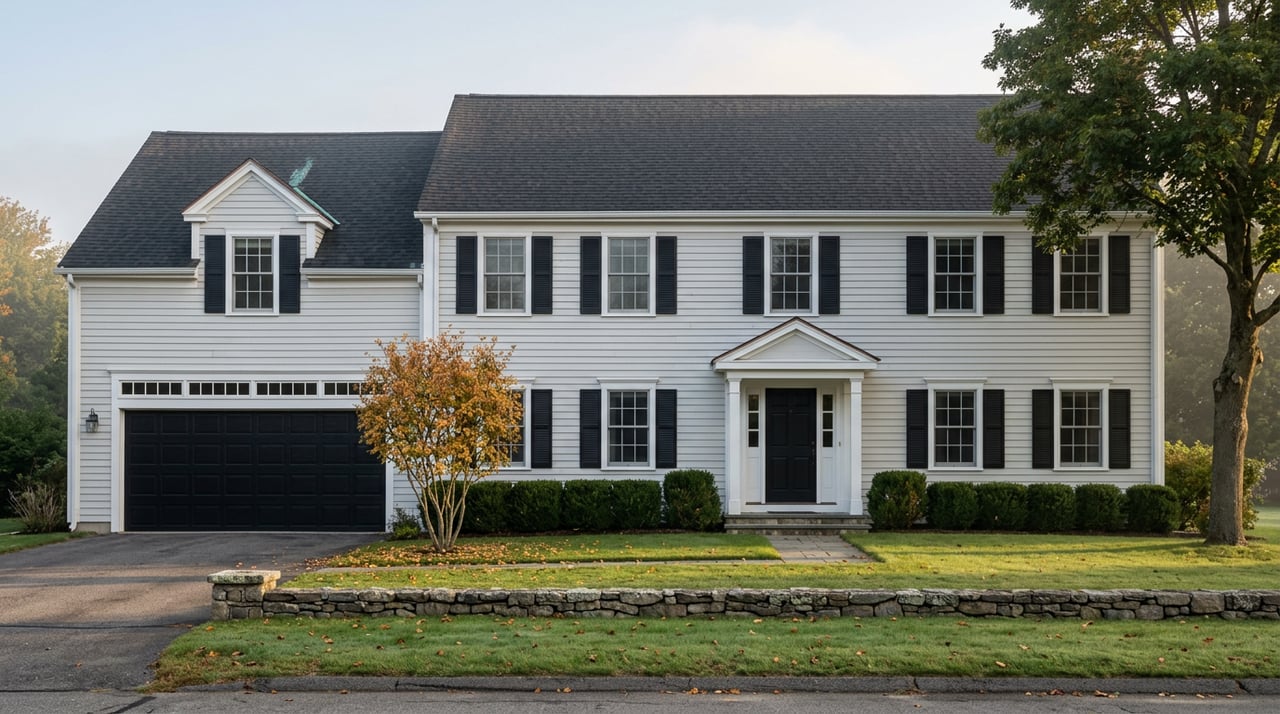
A buyer scrolling listings in Stamford sees two prices that seem to describe two different cities. A single-family colonial in Springdale lists for something close to seven figures. A condo three miles away, in a building with a doorman and a view of the harbor, lists for less than half that. The instinct is to treat the gap as free money: buy the condo, pocket the difference, move on.
The instinct is wrong more often than the listing page lets on.
Two Prices, One City
Stamford's housing market gets reported as a single median, and that number moves around depending on which tracker you check and which week you check it, landing anywhere from the low $600,000s to around $700,000 through the first half of 2026. That range isn't noise. It's the average of two markets that don't behave the same way.
The typical detached single-family home in Stamford was trading close to $975,000 as of mid-2026. Condo activity in the same window centered closer to $444,000. Blend those two figures into one citywide median and you get a number that describes neither market accurately, which is exactly the problem for anyone trying to compare a specific house to a specific condo using a portal's headline stat.
The purchase price gap between those two medians is roughly $530,000. That number gets most of the attention. It shouldn't. The number that actually decides whether the condo is the better deal lives somewhere else entirely, in two places most buyers don't check until after they've already fallen for a unit: the property tax formula and the HOA statement.
The Tax Code Already Gives the Condo a Discount
Connecticut assesses residential property at 70 percent of market value, then multiplies that assessed value by a local mill rate to produce the annual tax bill. Stamford runs four separate tax districts, and for the fiscal year that closed this past June, those districts carried rates between roughly 23.27 and 23.92 mills. The Board of Finance resets the rate every May, so the exact current-year number is worth confirming directly with the Stamford Assessor's office before you run your own math, but the mechanics don't change year to year.
The Stamford Board of Finance has published a clean worked example that shows how this scales: a home assessed at $500,000 in the city's District A, at that district's 23.92 rate, produces an annual bill of $11,960.
Run the same formula on our two medians using a rate in the middle of Stamford's four-district range, about 23.47 mills. The $975,000 single-family home carries an assessed value near $682,500 and an annual tax bill around $16,025, or about $1,335 a month. The $444,000 condo carries an assessed value near $310,800 and an annual bill around $7,295, or about $608 a month. Same rate, same city, a monthly tax gap of roughly $727 in the condo's favor. Nobody had to negotiate anything. The tax code did that work automatically, because a lower sale price produces a lower assessed value even when the rate applied to both properties is identical.
This is the part of the math that makes the condo look like a clear win. It's also only half the ledger.
| Scenario | Est. Assessed Value | Monthly Property Tax* | Typical Monthly HOA | Combined Monthly Carry |
|---|---|---|---|---|
| Single-family, ~$975K | ~$682,500 | ~$1,335 | none | ~$1,335 |
| Condo, basic building | ~$310,800 | ~$608 | $200-$400 | ~$808-$1,008 |
| Condo, pool/gym building | ~$310,800 | ~$608 | $350-$700 | ~$958-$1,308 |
| Condo, full-service tower | ~$310,800 | ~$608 | $600-$1,200+ | ~$1,208-$1,808+ |
*Illustrative, using a 23.47 mill rate (the midpoint of Stamford's four districts for the fiscal year that ended in June) and Connecticut's 70 percent assessment ratio. Confirm your property's actual district and current mill rate with the Assessor's office before using these figures to compare a real listing.
The HOA Statement Is Where That Discount Gets Spent
Downtown Stamford's condo stock skews old by national standards. Redstone Manor went up in 1958. Crosswinds followed in 1964. The Metropolitan dates to 1968. Bedford Towers and the Kingswood of Stamford both opened in 1972. The Buckingham arrived in 1976. The Biltmore, at 17 stories, is the relative newcomer at 1987. These are the buildings that make up a large share of what shows up when a buyer searches for a condo in the city's historic core, and every one of them predates the modern practice of funding a reserve account against the eventual cost of a new roof, new elevators or a new boiler.
Association dues in these buildings track directly with age and amenity load. Basic, low-amenity buildings run in the neighborhood of $200 to $400 a month. Buildings with a pool or a fitness room tend to land between $350 and $700. Full-service towers with a concierge, garage parking and on-site management run $600 to $1,200 a month and up. One downtown building's public fee schedule shows dues ranging as high as $2,400 a month for its largest units, a figure that bundles in heat, hot water, trash pickup, snow removal and upkeep of the common areas.
Run that top-end number back through the comparison. A condo owner paying $1,200 a month in dues, on top of the $608 monthly tax bill, is carrying about $1,808 a month before a mortgage payment even enters the picture. That's $473 more than the single-family owner's entire monthly tax bill. The math that made the condo the obvious discount at the top of this piece has not just narrowed. It has reversed.
None of this means the dues are unreasonable or that the older buildings are poorly run. It means the fee schedule, not the sale price, is the number that determines whether the arithmetic favors the house or the condo, and that number lives in a resale certificate the portal listing never shows you.
Newer Doesn't Mean Cheaper, It Means Different Math
Harbor Point complicates the story rather than resolving it. The waterfront district built out of a former industrial brownfield carries a meaningfully younger building stock than the downtown core, and condo pricing there runs higher per square foot, close to $490 as of December 2025, than the citywide condo figure. The developer, Building and Land Technology, has built more than 4,000 apartments in the neighborhood since the redevelopment began in 2009. That scale of recent construction is why the neighborhood's for-sale stock, condo and rental alike, tends to sit on newer bones than downtown's legacy towers: newer buildings, current construction codes, and reserve funding structured under modern practice rather than inherited from an association that's been operating since the Nixon administration.
Newer buildings tend to carry higher dues up front because they come loaded with amenities and structured parking. What they typically don't carry is the deferred-maintenance risk that sits quietly inside a 1964 elevator shaft. That's not an argument for one neighborhood over another. It's an argument for treating "condo" as a category with wildly different risk profiles depending on the decade a building went up, in the same way a buyer would never compare a 1958 single-family house to a 2020 build without asking about the roof.
What to Pull Before You Compare Two Listings
Before treating any two Stamford properties as comparable on price alone, request the following:
- The building's resale certificate and most recent reserve study, which shows how well funded the association is against future capital repairs
- The property's specific tax district, since Stamford's four districts don't share a single rate
- The current fiscal year's mill rate directly from the Assessor's office, since the Board of Finance resets it every May
- The building's year of construction and any record of prior special assessments
A Few Questions Worth Asking Directly
Does a lower sale price always mean a lower monthly cost? Not once HOA dues enter the picture. The tax formula favors lower-priced condos automatically. Dues in older, full-service buildings can erase that advantage entirely.
How do I find which tax district a specific address sits in? The Assessor's office can confirm this directly, and it matters because Stamford's four districts have carried rates that differ by more than half a mill from each other.
Why do older buildings carry more special assessment risk than newer ones? Reserve study practice has become more rigorous over the past decade. Buildings that predate that shift sometimes carry dues that don't fully reflect the true future cost of replacing major systems, which is precisely what a reserve study is meant to surface before you own the problem.
The blended median tells you what Stamford looks like on average. It won't tell you what a specific building costs to actually live in. That number sits in the resale packet, the tax district lookup and the reserve study, three documents a portal search never shows and a spreadsheet answers in ten minutes if you know what to ask for.
If you're weighing a Stamford single-family home against a downtown or Harbor Point condo and want the real monthly numbers run before you write an offer, Robin Bartholomew can walk through the tax district, the building's reserve health and the actual carrying cost side by side. Schedule a Consultation to get the math right before the mortgage does.