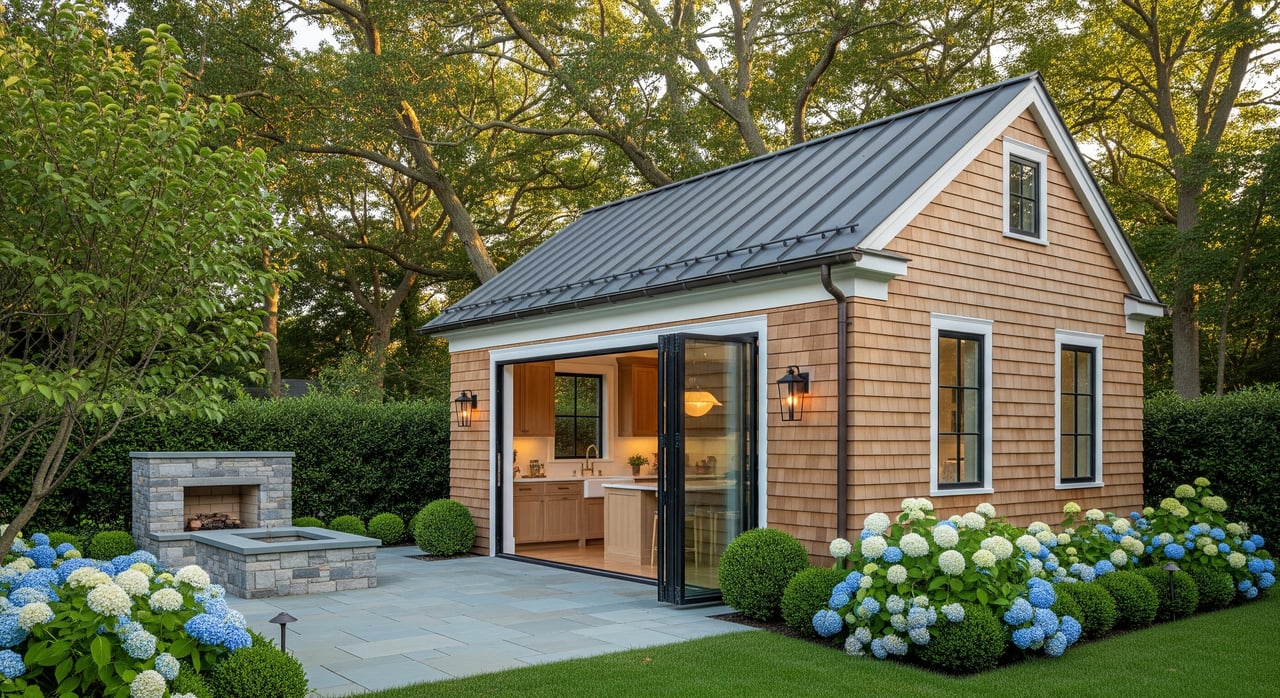
Thinking about adding an accessory dwelling unit to your Westport property to create rental income and long-term value? You are not alone. Many homeowners see ADUs as a smart way to right-size their home, support multigenerational living, or offset carrying costs. In this guide, you will learn how to model an ADU’s income and costs, understand local compliance touchpoints, and make design choices that boost rentability and resale. Let’s dive in.
Why ADUs work in Westport
Westport sits in a high-demand Fairfield County corridor with access to transit into New York City and coastal amenities that support strong long-term housing demand. Well-designed ADUs can attract a wide range of renters and future buyers who value flexible living space and potential income.
High home values and limited land mean ADUs here are often garage conversions or compact, detached units. Utility connections also matter. If your home is on septic, upgrades may be required to support added bedrooms or occupancy. If you are in a historic area or an overlay district, expect design or siting constraints. Finally, verify short-term rental rules before you assume any vacation or corporate rental income.
Build a simple ADU pro forma
A clear model helps you decide whether to build, how to finance, and what rent you need to meet your return goals.
Key inputs to include
- Development costs
- Construction hard costs per square foot or lump sum
- Soft costs: architect/design, engineering, permits, inspections, utility hookups
- Site work: foundation, drainage, driveway, landscaping, any sewer or septic work
- Contingency: commonly 5 to 15 percent of total hard costs
- Furnishings and appliances if renting furnished
- Financing costs
- Loan origination, interest during construction, closing costs, appraisal
- Operating assumptions
- Gross monthly rent by unit type: studio, 1-bedroom, or 2-bedroom
- Vacancy and credit loss: model 5 to 10 percent for long-term rentals
- Operating expenses: utilities you pay, insurance, repairs, reserves, property management if used
- Property tax impact and potential reassessment
- Exit and resale
- Cap rate or resale premium you expect for an income-producing ADU
- Holding period: 5 to 10 years
- Metrics to calculate
- Net operating income, cash-on-cash return, monthly cash flow after debt, debt service coverage, simple ROI, payback period, and estimated property value uplift
Example model for a 600 sq ft 1-bedroom
Use local contractor bids and current rental comps to replace these placeholders. Treat the numbers below as illustration only.
- Construction and site work: $X per sq ft × 600 sq ft = $Y
- Soft costs: estimate 10 to 20 percent of hard costs
- Contingency: 10 percent
- Furnishings and appliances: lump sum
- Financing: construction loan or HELOC with interest-only during build
- Rent comps: if comparable 1-bedroom rents are $A to $B per month, model the midpoint
- Vacancy: 7 percent of gross rent
- Management: 8 percent of collected rent if you hire a property manager
- Maintenance and insurance increment: estimate $C to $D per year
From there, calculate:
- Effective gross income: monthly rent minus vacancy and management
- Net operating income: effective income minus operating expenses
- Annual debt service: principal and interest payments
- Net cash flow: NOI minus annual debt service
- Cash-on-cash return: net cash flow divided by your cash invested
- Payback period: cash invested divided by annual net cash flow
Sensitivity scenarios to test
Model best, base, and worst cases before you commit.
- Best case: higher rent, lower vacancy, modest cost underrun
- Base case: midpoint rent, typical vacancy, expected costs
- Worst case: lower rent, longer lease-up or turnover gaps, cost overruns or required septic upgrade
Breakeven and payback steps
- Step 1: Add all-in project cost including soft costs and contingency
- Step 2: Define your financing plan and expected interest rate
- Step 3: Use conservative rent and a 5 to 10 percent vacancy factor
- Step 4: Add realistic operating expenses and a reserve for capital items
- Step 5: Compute the monthly rent required to cover debt service and hit your target cash-on-cash return
- Step 6: Estimate years to recoup your initial cash investment
Financing options to compare
Your best path depends on your equity, rate environment, and appetite for leverage. Speak with multiple lenders and get pre-approval language specific to your ADU scope because underwriting varies by detached units vs. conversions.
- Cash: fastest and no interest cost, but ties up liquidity
- HELOC or home equity loan: common for owner-occupants; watch borrowing limits and rate variability
- Cash-out refinance: can roll costs into a new mortgage; weigh closing costs and new rate
- Construction or renovation loan: designed for new builds or conversions, often converts to a permanent loan
- FHA 203(k) or similar rehab programs: may allow ADU conversions with owner-occupancy; lender rules vary
- Personal loan: possible for small projects, often higher interest
- Grants or incentives: check for Connecticut or local programs; availability changes and must be verified
Taxes, assessment, and valuation
Adding an ADU often increases assessed value and property taxes. Work with the Westport Assessor’s Office early to understand likely impacts. You must report rental income and can typically deduct allowable expenses such as maintenance, insurance, utilities you pay, and allocable mortgage interest or depreciation under tax rules. For short-term rentals, expect different registration and tax considerations. Speak with a CPA for personalized guidance.
On resale, value capture depends on local acceptance of ADUs as income-producing space and on documented rental performance. Appraisers may use an income approach if you have a proven rent roll, or a sales comparison approach referencing similar Westport properties with ADUs. Keep clean records to support valuation.
Compliance checklist for Westport
Before design or construction, confirm the following with the appropriate town departments and state code resources. Local policies change, so verify current rules on official town websites.
- Zoning allowance: whether ADUs are permitted by right or require a special permit, and any maximum size or lot coverage
- Setbacks and height limits for the chosen location
- Parking: whether additional spaces are required or waived for ADUs
- Utilities: sewer capacity or septic upgrade requirements and meter policies for water, electric, and gas
- Building code: egress, fire separation for attached units, smoke and CO detectors, ceiling heights, insulation, and energy code compliance
- Bedroom definitions and egress that affect occupancy and rentability
- Certificate of occupancy and any rental registration steps
- Short-term rental rules and any registration requirements
Local contacts to consult:
- Westport Planning and Zoning Commission
- Westport Building Department
- Westport Health or Septic authority or Fairfield County Health Department
- Westport Assessor’s Office
- Connecticut Department of Housing and state building code resources
Design choices that boost rentability
Smart, durable design improves tenant experience and your long-term cash flow.
- Independent entrance and clear separation from the main home
- Efficient layout that makes a small footprint live larger
- Durable finishes and low-maintenance systems that stand up to turnovers
- In-unit laundry or a clearly defined shared laundry setup
- Sound insulation for privacy and comfort
- Separate utility metering where feasible to simplify billing
- Clear, off-street parking if required; dedicated bike storage in transit-friendly areas
- Simple universal design touches such as zero-step thresholds and wider doors to widen appeal
- Furnished vs. unfurnished strategies with rent and turnover implications
Documentation that protects value
Treat your ADU like a small business and keep thorough records.
- Permits, approved plans, and final certificate of occupancy
- Lease templates, executed leases, and a rent roll to demonstrate performance
- Maintenance logs, appliance warranties, and service records
- Clear unit identification such as a unit number or mailing address if appropriate
- Any deed restrictions, easements, or declarations tied to the ADU
First calls to make
Start with a short, focused outreach plan to reduce surprises.
- Westport Planning and Zoning Commission to confirm allowance, size, and coverage
- Westport Building Department for permitting steps and code checkpoints
- Health or Septic authority to confirm sewer capacity or septic needs
- Assessor’s Office for assessment and tax implications
- A local lender for pre-approval aligned to your ADU scope
Market research tips
Use current local rental listings, property management firms, and neighborhood comparables to estimate rent for studios and 1-bedrooms. Be conservative. Do not assume peak-season or short-term rates unless you confirm local rules and can sustain performance. Consider exploring rent per square foot and rent by bedroom count in Westport and nearby Fairfield County towns to set realistic ranges.
Next steps for homeowners
- Gather three to six recent rental comps for a similar unit size in Westport
- Request two to three contractor bids for your chosen path such as a garage conversion or small detached build
- Confirm septic or sewer capacity and short-term rental rules
- Build a base, best, and worst-case pro forma and check breakeven rent
- Speak with a CPA and a lender to finalize tax and financing assumptions
- Sequence your plan with design, permitting, and construction milestones
If you want a data-informed second set of eyes on your pro forma or you need help positioning an ADU for rent-up or future resale, reach out. Our practice supports homeowners with disciplined valuation, rental placements, and trusted referrals to property managers, architects, and contractors.
FAQs
Will adding an ADU raise my Westport property taxes?
- Likely yes. The Assessor’s Office typically reassesses based on improvement value. Contact the Westport Assessor to understand potential changes.
Can I use an ADU for short-term rentals in Westport?
- Possibly, but rules vary and may require registration or limit duration. Confirm current policies before modeling short-term income.
Do I need separate utility meters for an ADU?
- Not always. Separate metering simplifies billing and is sometimes preferred by lenders or insurers. Confirm local utility and code requirements.
How long does it take to recoup ADU costs?
- It depends on construction cost, rent, vacancy, and financing. Build best, base, and worst-case models and use conservative rent assumptions.
Will lenders finance an ADU project?
- Many will. Options include HELOCs, cash-out refinances, construction or renovation loans, and some rehab programs. Obtain pre-approval tailored to your ADU scope.
What design features help an ADU rent faster in Westport?
- Independent entry, in-unit laundry, durable finishes, good sound insulation, and efficient layouts typically improve rentability and tenant satisfaction.