If you have ever driven through New Canaan and felt like no two beautiful homes tell the same story, you are not imagining it. This town stands out because its architecture spans centuries, from early historic forms to iconic mid-century modern design. If you are buying, selling, or simply trying to better understand what gives New Canaan homes their character, this guide will help you see the differences more clearly. Let’s dive in.
Why New Canaan Architecture Feels Distinct
New Canaan’s housing stock reflects a long timeline rather than one single design era. The New Canaan Museum & Historical Society’s building gallery includes homes and structures dating from 1764, 1799, 1825, 1845, 1878, and 1960, which shows how many architectural periods are part of the town’s visual identity.
That layered history is one reason New Canaan feels so memorable. You can see traditional New England forms, later revival styles, and landmark modern homes all within the same town. For buyers and sellers, that means curb appeal in New Canaan is often tied to architectural character as much as square footage or finishes.
The setting also plays a major role. New Canaan’s scenic landscape, former farmland, and strong open-space ethic have helped shape how homes sit on the land and how the town feels overall. In many cases, the lot and the architecture work together to define a property’s appeal.
Colonial and Colonial Revival Homes
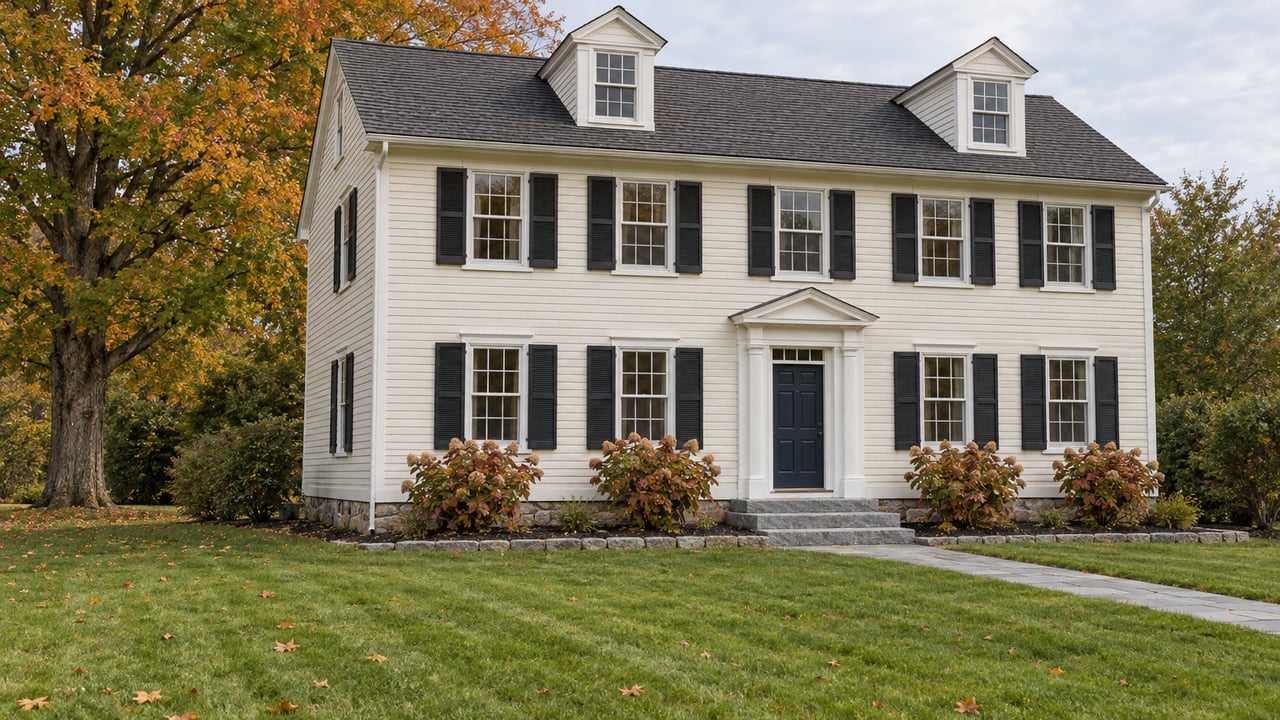
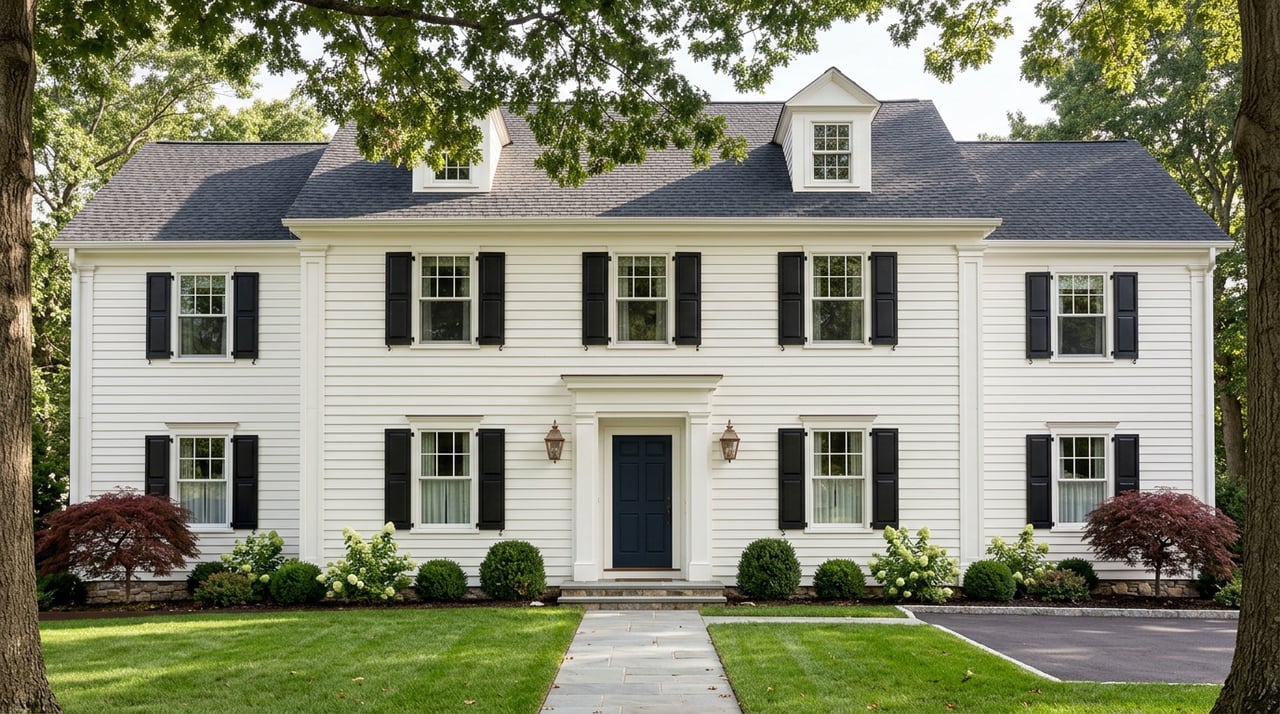
Colonial and Colonial Revival homes are among the most recognizable traditional homes in New Canaan. These houses are often formal and symmetrical, with centered front doors, aligned windows, and balanced facades that create a sense of order from the street.
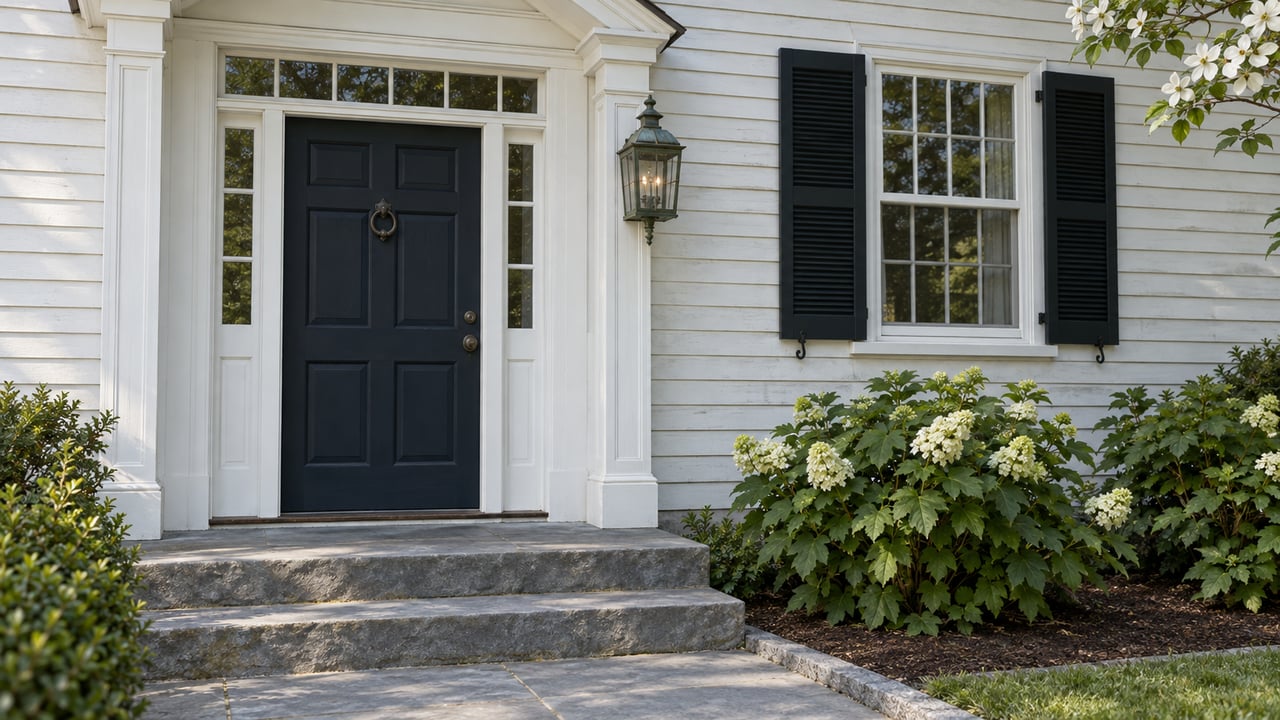
Historic New England describes Georgian houses as symmetrical, two-story, two-room-deep homes with center-entry facades. Colonial Revival homes often continue that same pattern, with decorative pediments, fanlights, sidelights, and gable, hipped, or gambrel roofs. Many later Colonial Revival homes also have more open interiors than earlier historic versions.
For you as a buyer, this style often feels familiar and easy to understand. The layout typically centers on a clear front hall with separate rooms rather than one large open living area. If you like defined spaces for living, dining, work, and privacy, this style may feel especially comfortable.
Light in these homes usually comes through standard sash windows rather than walls of glass. The result is often more even, steady daylight throughout the house. Outdoor space also tends to feel balanced and lawn-oriented, with the home reading as a composed structure set within the property rather than opening dramatically outward.
Cape Cod, Saltbox, and Farmhouse Forms
Cape Cod, saltbox, and farmhouse forms are another important part of New Canaan’s architectural story. These homes tend to feel more compact, efficient, and closely tied to New England building traditions.
Historic New England describes Cape Cod homes as one-and-one-half stories tall, two rooms deep, with steep gable roofs, central chimneys, and minimal overhangs. A saltbox form extends the rear roof plane over a one-story back addition, creating more usable space without changing the home’s essential footprint. The National Park Service describes the typical New England farmhouse as a two-story wood house with two rooms per floor and a central chimney.
These homes often appeal to buyers who want character without an oversized architectural statement. Their scale can feel intimate and practical, especially when set on wooded or lawn-focused parcels. In a town like New Canaan, where the rural landscape still shapes the experience of place, that simpler footprint can feel especially fitting.
Inside, these homes usually prioritize efficiency over expansiveness. Rooms may feel cozy rather than dramatic, and the experience of light is generally softer and less glass-heavy than in modernist homes. If you are drawn to historic charm, manageable scale, and a strong connection to the yard, these forms are often worth a closer look.
Modernist and Mid-Century Modern Homes
New Canaan is widely known for its modernist legacy. The town became a major center of experimental modern residential design after World War II, helped in large part by the Harvard Five: Marcel Breuer, Landis Gores, John Johansen, Eliot Noyes, and Philip Johnson.
According to The Glass House, more than thirty modern houses had been built in New Canaan by the end of 1952, and by the end of the 1970s that number had grown to more than one hundred. That history gives New Canaan a design identity that is unusual not just in Fairfield County, but nationally.
Modernist homes here often contrast sharply with Colonial or farmhouse forms. Britannica describes International Style buildings as rectilinear, open inside, and stripped of ornament, often using glass and steel. The Glass House itself is a single-story glass pavilion with no interior walls, large glass panels, steel columns, and a flat roof.
For you as a buyer, this usually means a very different living experience. These homes often prioritize open plans, flexible space, and abundant natural light. They also tend to blur the line between indoors and outdoors through terraces, courtyards, and long landscape views.
In New Canaan, that relationship to the site is a big part of the appeal. The Glass House describes its setting as a carefully curated landscape with unobstructed views and a deliberate blending of interior and exterior space. In practical terms, that means the land itself is often central to the value and feel of a modernist property.
How Each Style Lives Differently
Understanding architecture is not just about appearance. It is also about how a home functions day to day.
Here is a simple way to think about the main differences:
| Style | Typical Layout | Light Experience | Relationship to Outdoors |
|---|---|---|---|
| Colonial / Colonial Revival | Defined rooms and centered hall | Even daylight through standard windows | Balanced, lawn-oriented setting |
| Cape / Saltbox / Farmhouse | Compact and efficient | Softer, cozier light | Strong connection to yard and land |
| Modernist / Mid-Century Modern | Open and flexible | High natural light | Indoor-outdoor living and long views |
If you prefer structure and separation between rooms, Colonial homes often make the most sense. If you want charm and a smaller-scale feel, Cape, saltbox, and farmhouse forms may be a better fit. If you value openness, architectural drama, and strong site connection, modernist homes tend to stand out.
Why the Landscape Matters in New Canaan
In many towns, style alone defines a home’s first impression. In New Canaan, the landscape is part of the story.
The town’s scenic beauty, rural character, and conservation-minded approach help keep open space in the foreground. That setting supports very different architectural expressions. A Colonial can feel grounded by a broad lawn, a Cape can feel naturally settled on a wooded parcel, and a modernist home can use glass and openness to frame long views across the site.
This is one reason buyers are often drawn to New Canaan for more than just the house itself. The feeling of space, setting, and visual calm can be just as important as the floor plan. When you evaluate homes here, it helps to consider how the architecture responds to the land, not just how the rooms are arranged.
What This Means for Buyers and Sellers
If you are buying in New Canaan, architectural style can help you narrow your search much faster. Instead of looking at every home the same way, you can focus on the layout, light, and site relationship that best match how you want to live.
If you are selling, understanding your home’s style helps shape smarter positioning. Buyers are often responding to a property’s overall experience, not just to its bedroom count or renovation list. A well-marketed Colonial should highlight symmetry and room definition, while a modernist listing should emphasize light, openness, and the connection to the landscape.
That is where local context matters. In a town with such a layered housing stock, the strongest real estate guidance comes from understanding both design character and buyer expectations. When those pieces align, your search or sale becomes much more focused.
Whether you are comparing traditional homes, exploring modernist properties, or preparing to list a distinctive residence in lower Fairfield County, working with a local expert can help you interpret both the architecture and the market. If you want thoughtful, data-informed guidance tailored to your goals, connect with Robin Bartholomew.
FAQs
What architectural styles are most common in New Canaan homes?
- New Canaan is known for a mix of Colonial and Colonial Revival homes, Cape Cod and farmhouse-related forms, and a notable concentration of modernist and mid-century modern houses.
What defines a Colonial Revival home in New Canaan?
- Colonial Revival homes in New Canaan often feature symmetrical facades, centered entries, aligned windows, decorative details like pediments or sidelights, and a more formal interior layout with distinct rooms.
What is the difference between a Cape Cod and a saltbox home in New Canaan?
- A Cape Cod home is typically a one-and-one-half-story house with a steep gable roof and compact footprint, while a saltbox extends the rear roof plane over a back addition to create more interior space.
Why is New Canaan known for mid-century modern architecture?
- New Canaan became a major center of modern residential design after World War II, helped by the Harvard Five architects, and by the 1970s the town had more than one hundred modern houses.
How do modernist homes in New Canaan feel different from traditional homes?
- Modernist homes usually feel more open, brighter, and more connected to the landscape, while traditional homes like Colonials often feel more structured, symmetrical, and room-defined.
Why does landscape matter when evaluating New Canaan homes?
- New Canaan’s scenic setting, former farmland, and open-space ethic make the lot, views, and relationship between house and land an important part of how many homes are designed and experienced.