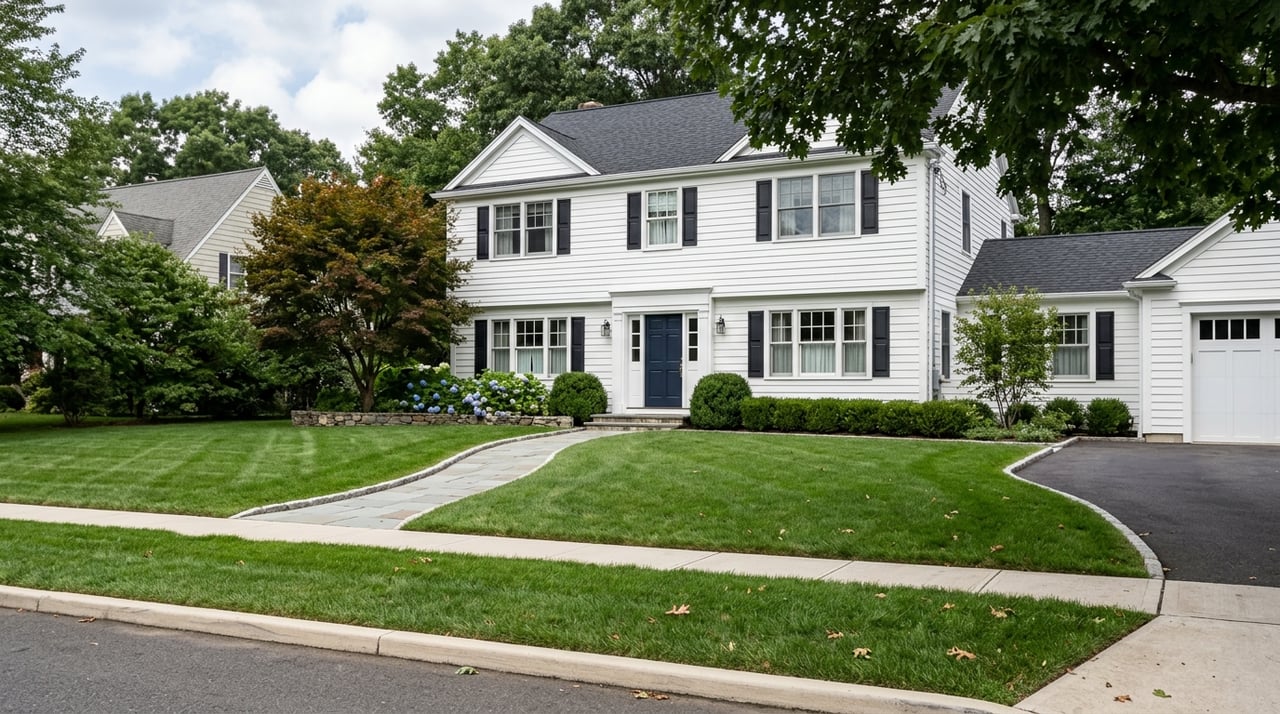
You can search in Darien for weeks and still feel like the market makes no sense. One home sells almost immediately, another sits longer, and prices can shift sharply from one pocket of town to the next. If you are buying in Darien, it helps to know you are not really shopping one market. You are shopping several micro-markets at once. This guide will show you how Darien’s different areas behave, what the numbers mean, and how to compare homes more accurately. Let’s dive in.
Why Darien Acts Like Multiple Markets
Darien is a small, mostly residential town with limited land. According to the town profile, it spans 23.4 square miles total, with about 12.9 square miles of land and 10.5 square miles of water. The town also reports an owner-occupied housing rate of 82.4%, and Census QuickFacts place the median owner-occupied home value at $1,822,400 for 2020 through 2024.
That matters because a small town with high homeownership and limited space does not behave like a broad, uniform market. Darien’s planning documents describe a narrow patchwork shaped by I-95 and the railroad, with more active development concentrated around downtown and the two train stations. Outside those areas, much of the town remains lower-density single-family housing.
In practical terms, that means your home search should be more specific than “Darien.” A house near the Darien station corridor may compete with a very different set of homes than one in Tokeneke or Noroton Heights. If you compare everything to the townwide median, you can easily misread value.
Darien-Wide Numbers Need Context
The overall market in Darien is tight and expensive, but exact figures vary by source and timing. The Darien Board of REALTORS® reported an April 2026 median sales price of $3.1 million, 21 days on market, 43 homes for sale, 50 new listings, 29 pending sales, and 13 closed sales. Realtor.com’s March 2026 snapshot showed a median listing price of $2.75 million, 71 properties for sale, 24 days on market, and a 105% sale-to-list ratio.
Those numbers are useful, but they are not interchangeable. They come from different datasets and different reporting windows. Together, they tell you the market is competitive. They do not tell you how a specific Darien pocket is behaving right now.
That is where micro-market analysis becomes valuable. If you are serious about buying well, you want to compare homes inside the same slice of town, not just across the entire ZIP code.
Tokeneke: Scarce and Premium
Tokeneke is one of Darien’s most distinct micro-markets. The Tokeneke Association describes it as a summer colony that began in the early 1900s and later evolved into year-round homes. The neighborhood includes 268 homes clustered around a tidal cove on Long Island Sound, with older architectural styles that include Spanish Colonial Revival, fieldstone cottage, and Tudor homes.
The market snapshot supports its premium status. Realtor.com reports 10 homes for sale, a median listing price of $2.75 million, 24 days on market, and a 105% sale-to-list ratio. Redfin’s April 2026 data shows a median sale price of $3,156,327 and 13 days on market.
For you as a buyer, Tokeneke is usually less about broad comparison shopping and more about waiting for the right opportunity. Inventory is limited, and the home styles, setting, and pricing often make this pocket behave differently from other parts of Darien. If you want to buy here, patience and fast decision-making often need to work together.
Noroton: A Distinct High-Value Pocket
Noroton is not just a casual neighborhood label. It is a Census-defined place, which gives it a clearer profile than many subareas. Census QuickFacts show 1.81 square miles of land, a 2020 population of 5,317, an owner-occupied housing rate of 71.5%, and a median owner-occupied value of $1,620,000.
Redfin’s April 2026 neighborhood data puts Noroton’s median sale price at $2,971,396, with a median of 16 days on market. That places it firmly in Darien’s high-value tier, but with a different mix and feel than Tokeneke. For buyers, Noroton can make sense if you want a premium Darien address but are comparing options beyond the best-known waterfront-oriented enclave.
The key is not to assume all high-priced areas are interchangeable. Noroton’s pricing, housing stock, and pace can differ from both Tokeneke and Noroton Heights. Looking at recent nearby sales in the same micro-market will give you a much better sense of what is realistic.
Noroton Heights: Transit-Oriented and Fast-Moving
Noroton Heights stands out because Darien’s planning framework points to it as a transit-oriented growth area. The town’s draft Plan of Conservation and Development describes commercial and mixed-use projects along Heights Road, along with higher-density residential zoning that includes smaller Colonials, Craftsman, and Cape Cod homes than lower-density districts elsewhere in town. The town also notes that the Noroton Heights Train Station sits near transport-oriented development and offers ample commuter parking.
That built environment shapes the market. Realtor.com’s March 2026 neighborhood page shows 5 active listings, a median list price of $1.36 million, 40 days on market, and a 112% sale-to-list ratio. Redfin’s April 2026 data shows a median sale price of $1,709,365 and 9 days on market.
At first glance, those numbers may look inconsistent. They are a good reminder that neighborhood data depends on source and time window. Redfin explains that smaller geographies often use rolling three-month windows, which is one reason neighborhood metrics can vary from townwide snapshots or from other platforms.
For your search, the takeaway is simple. Noroton Heights may offer a different entry point into Darien than some other pockets, especially if you value train access and a more transit-linked setting. But because the area can move quickly, broad assumptions about value can be risky.
Downtown Darien: Different Product, Different Demand
Downtown Darien and the Darien station corridor also deserve to be treated as their own micro-market. The town’s planning documents place downtown and the Darien Train Station along Boston Post Road and describe ongoing commercial and mixed-use redevelopment in the core, including apartment-oriented projects.
That matters because downtown inventory may include housing types and buyer demand that differ from Darien’s more traditional single-family pockets. A buyer looking near the station may be comparing a very different lifestyle and price structure than someone focused on larger-lot homes elsewhere in town. Even without a single headline statistic for this corridor, the land-use pattern strongly suggests it should be evaluated separately.
If your priorities include commuting convenience, access to commercial areas, or a lower-maintenance property type, downtown may deserve a closer look. Just be careful not to compare those homes directly with properties in lower-density sections of town without adjusting your expectations.
How to Compare Darien Homes Better
When you are searching in a town like Darien, the biggest mistake is comparing unlike with unlike. A well-located home in Tokeneke should not be judged against a transit-oriented property near Noroton Heights just because both are in Darien. The setting, supply, housing mix, and buyer pool can all differ.
A smarter approach is to compare homes based on the micro-market they actually compete in. That usually means looking at:
- Recent closed sales in the same pocket
- Current active listings nearby
- Days on market within that area
- Sale-to-list patterns from the same data source and time period
- Housing type, lot size, and location context
This is also why one headline number for townwide median price does not tell the full story. In Darien, the better question is not “What is the market doing?” It is “What is this part of Darien doing?”
Watch How Darien Is Changing
Darien’s micro-markets are not fixed. The draft Plan of Conservation and Development says roughly 56 new houses were constructed between 2022 and 2025. It also notes that homeowners may now apply for accessory dwelling units under 2024 regulations, with 15 ADUs approved so far.
The same planning document connects current change to high land costs, aging buildings, strong housing demand, and transit-oriented redevelopment in Downtown and Noroton Heights. That means today’s housing mix may not look exactly the same a few years from now. Rebuilds, teardowns, ADUs, and station-area development can gradually reshape how certain pockets function.
For buyers, this is important because the home you buy is not just tied to current inventory. It is also tied to the direction of that specific area. Understanding where change is happening can help you assess both fit and future competition.
Darien in Fairfield County Context
Darien sits in a very specific slice of the Fairfield County market. Realtor.com lists Greenwich with a median listing price of $3.2 million, 24 days on market, and 229 active listings. Stamford, by contrast, shows a median listing price of $639,900, 30 days on market, and 286 active listings.
Darien’s March 2026 snapshot of a $2.75 million median listing price and 71 homes for sale places it much closer to Greenwich on pricing, but with much less inventory than either town. That smaller supply is one reason micro-market strategy matters so much here. With fewer homes available, buyers often need to get precise quickly.
What This Means for Your Search
If you are buying in Darien, your best advantage is clarity. Get specific about what kind of location, housing type, and daily routine you want before you judge pricing. A home near a station corridor, a higher-value central pocket, or a coastal enclave may all carry very different market dynamics even within the same town.
This is where disciplined analysis matters. Looking at the right comparable sales, the right timeframe, and the right neighborhood boundaries can help you avoid overpaying, underestimating competition, or dismissing a strong opportunity too early. In a market as nuanced as Darien, the details are not extra. They are the strategy.
If you want a more precise read on which part of Darien fits your goals, Robin Bartholomew can help you build a focused, data-driven search plan.
FAQs
How do Darien micro-markets affect your home search?
- Darien’s neighborhoods can have different price points, housing types, inventory levels, and market speed, so you should compare homes within the same area rather than rely only on townwide data.
What is the difference between Tokeneke and Noroton Heights in Darien?
- Tokeneke is a premium, low-inventory coastal enclave with a distinct housing character, while Noroton Heights is more transit-oriented and includes higher-density residential areas with different pricing and demand patterns.
Why can Darien neighborhood data look different across websites?
- Different platforms may use different datasets and time windows, and Redfin notes that smaller geographies often rely on rolling three-month windows, which can lead to different neighborhood figures.
Is downtown Darien a separate real estate market from other parts of town?
- In many cases, yes, because the downtown and station corridor include more mixed-use and apartment-oriented development, which can create different demand and pricing dynamics than lower-density single-family areas.
How should you compare homes in Darien before making an offer?
- Focus on recent sales, active competition, days on market, and sale-to-list trends within the same micro-market, using the same source and similar timeframe whenever possible.